
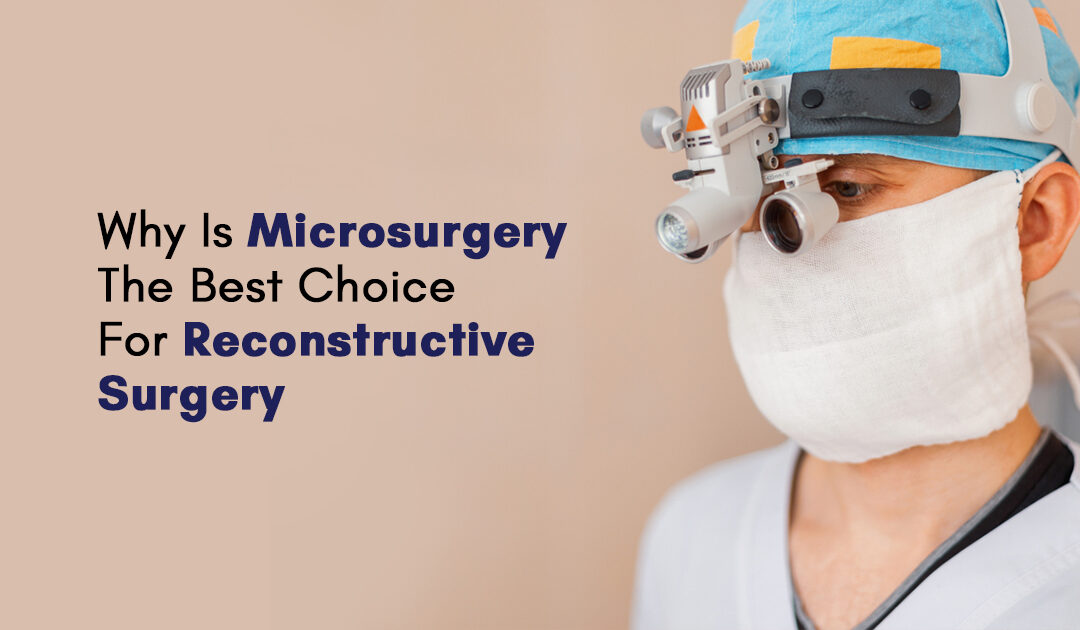
Microsurgery is known as the gold standard of reconstructive surgery for a lot of reasons. This high-technology surgery has successfully transformed the art of the things that can be accomplished in the restoration of form and function after trauma, cancer, or congenital deformity. You may wonder why is microsurgery so unique, and why is it the ultimate choice for complicated reconstructions?
Microsurgery is typically done under high-powered microscopes and special precision instruments to operate on extremely small structures, usually blood vessels and nerves, less than a millimeter in size. This sort of precision allows the surgeon to move tissue from one part of the body to another, reattaching blood vessels and nerves so the moved tissue will survive and function best. This is “free flap” surgery, and it’s used in everything from breast and head and neck reconstruction to limb salvage and facial reanimation.
Most importantly, however, is that microsurgery, unlike previous techniques, restores both function and form, not simply closing a defect. Nerve reanastomosis provides the surgeons with the ability to restore movement and sensation to the rebuilt area, which is what the previous techniques were unable to do. For instance, In traumatic loss or cancer removal, microsurgery could rebuild sensitive tissue like the face, hands, or even tongue, allowing individuals to eat, talk, and smile again. In limb salvage, it would indicate the difference between amputation and salvage of an intact arm or leg.
Microsurgery is extremely versatile as it can be applied to reconstruct almost any region of the body, from the head and neck to the breast and the extremities, and even chronic infection- or wound-bearing extremities. In cancer resections, it allows surgeons to resect tumors more, as it provides them with assurance that they can reconstruct the defect with living tissue, enhancing survival and quality of life. In congenital malformations of children and infants, microsurgery can be used to correct deformities earlier, allowing for normal survival and function.
Another significant benefit is the natural appearance and sensation of the rebuilt site. Because the surgeons are using the patient’s own tissue, the result is more natural than with the foreign implants. That is particularly helpful when it comes to breast reconstruction, as microsurgery can result in a breast that feels, looks, and even moves more like the natural breast. There is less risk of rejection or allergic reaction, and long-term results are better, with fewer revision surgeries required.
Recovery is usually better and quicker following microsurgery compared to more traumatic old techniques. Accuracy of procedure translates into smaller incisions, less tissue damage, and cleaner closure of the wound, resulting in less bleeding, less risk of infection, and quicker return to previous levels of function. Special recovery rooms and analgesic techniques also allow patients to be safely and comfortably able to recover. Microsurgery success rates are staggering even in challenging cases. Studies show phenomenal results with excellent flap survival rates and phenomenal limb salvage rates, even in poorly perfused or diabetic patients. The latest technology advancements, such as robot-assisted surgery and improved imaging, keep increasing the potential of what can be achieved, making surgery safer and more effective than ever before.
To conclude, microsurgery is the better option for reconstructive surgery since it provides unparalleled precision, versatility, and capacity for restoring form and function. It has pushed the boundaries of reconstructability, and improved the quality of life for tens of thousands of patients, and continues to evolve with new technologies. For all situations needing complex reconstruction, microsurgery is the most advanced, reliable, and natural option available.