
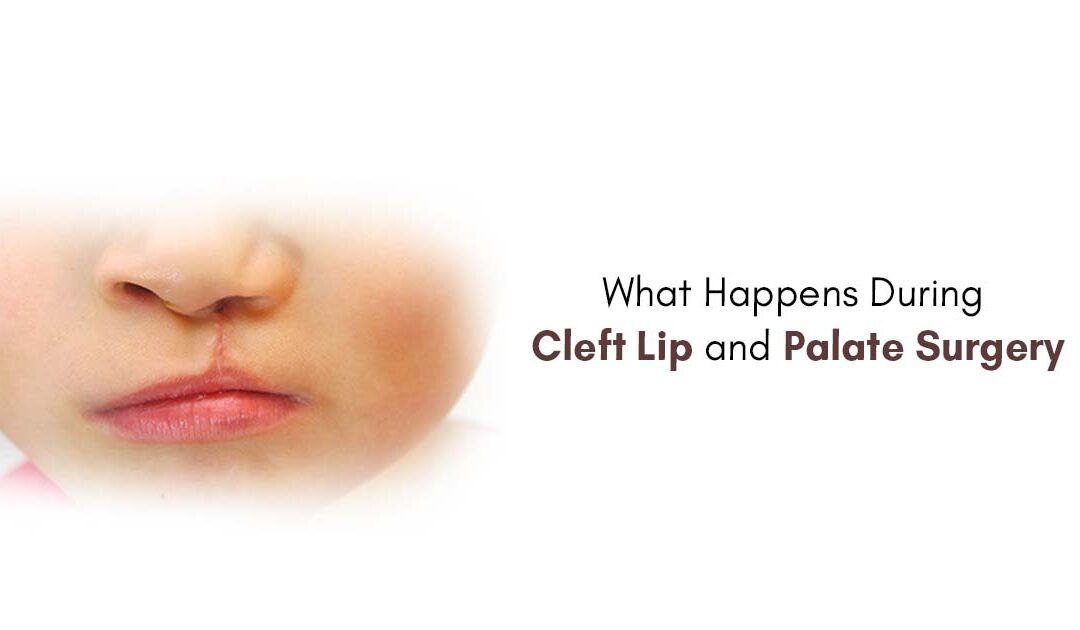
Cleft lip and cleft palate are two of the most common congenital facial and oral malformations. Both these conditions, cleft lip and cleft palate occur when a baby’s lip or roof of the mouth, also known as palate does not come together in the way it is supposed to, in the early stages of pregnancy. While a cleft lip involves an opening in the upper lip, which can range from a small notch to a large cleft that goes into the nose, cleft palate is an opening in the roof of the mouth, either to the hard palate, the soft palate, or both.
Both cleft lip and cleft palate can either occur by themselves or together. Moreover, both may also occur on one or both sides of the mouth. A cleft can have a significant impact on feeding, speech, hearing, and dental health in a child. Early intervention of the problem and management by a healthcare professional is the key to successfully navigating the challenges of cleft lip and palate, and achieving optimal function and emotional health for the children and families affected by these congenital conditions.
What Are the Signs and Symptoms of Cleft Lip and Cleft Palate?
Both cleft lip and cleft palate can be functional and visible aspects:
- Visible gap or split: It occurs on the upper lip, palate, or both. One or both sides of the face are cleft and either a small notch or a full division that goes down to the nose.
- Difficulty in Feeding: Feeding difficulty or breast-feeding/bottle-feeding difficulty can also be felt by newborns as they cannot close the mouth properly to form a seal.
- Issues in Speech or Slurry Speech: If not treated, clefts may result in speech problems or nasal-sounding because the palate is unable to separate the mouth and nasal cavities efficiently.
- Loss in Hearing and Ear Infections: The children with cleft palate are more prone to have an ear infection and middle ear fluid, both of which affect hearing.
- Oral Problems: Irregular, missing, or extra teeth are common, and cavities are likely.
- Psychosocial Issues: Adolescents in secondary school can experience issues with self-esteem or social issues due to variations in their face.
What Are the Causes of Cleft Lip and Palate?
While the specific etiology of cleft lip and palate cannot always be determined, several risk factors and predisposing influences have been identified. They include:
- Genetic causes: Risk usually increases with a positive family history for clefting, and clefts may even be associated with genetic syndromes.
- Environmental factors: Prenatal alcohol and tobacco use, drug use, obesity, and gestational diabetes may act as a risk.
- Dietary components: Pregnancy folic acid deficiency has also been linked with elevated risk.
- Syndromic associations: Some clefts are syndromic. For instance, the Pierre Robin sequence.
How is a Cleft Lip or Palate Diagnosed?
Cleft lip is normally visible on their normal antenatal ultrasound scan, typically at 20 weeks’ gestation. It is important to note that not every cleft can be seen antenatally, particularly cleft palate. If they are not seen antenatally, the condition will normally be diagnosed straight away at birth at the newborn physical examination. The submucous cleft palate, hidden by the lining of the mouth, on the other hand, cannot be identified until a feeding or speech difficulty arises. It is then that the diagnosis and evaluation by a specialist cleft team is thoroughly evaluated and planned.
How Reconstructive Surgery Can Be Helpful for Cleft Lip and Palate Repair?
Reconstruction forms the foundation of cleft lip and palate reconstruction which is to achieve form and function. Cleft lip repair may be performed at 3 to 6 months of age, with palate repair at 9 to 18 months of age. Technique and timing are personalized in the child, depending on overall health and degree of cleft, in clinical practice.
Cleft lip and/or palate repair makes it possible to reconstruct a more normally formed face and to have normal facial growth. Closure of the palate allows for better distinguishable separation of the mouth from the nose for clear speech and efficient swallowing. Additionally, surgical rehabilitation reduces the risk of recurrent ear infection, dental complication, and hearing loss. By active and appropriate repair, children can experience reinforced social integration and self-concept. Additional surgery, dental treatment, orthodontics, and speech therapy may be required in some cases as the child matures. With comprehensive, multidisciplinary care, children with cleft lip and palate can have normal and healthy lives.